PASGT vs MICH vs Special Ops: Which Ballistic Helmet Is Right for You?
How to Choose a Ballistic Helmet (Complete 2026 Buyer’s Guide)
Choosing the right ballistic helmet is critical. Whether you’re in law enforcement, private security, training environments, or focused on preparedness, selecting the correct helmet can impact comfort, mobility, and operational performance.
This guide will walk you through everything you need to know before buying a ballistic helmet.

 Understand Protection Levels
Most modern tactical helmets are rated:
NIJ Level IIIA
Designed to help protect against common handgun threats including:
-
- 9mm FMJ
-
- .40 S&W
-
- .45 ACP
-
- .357 Magnum
Level IIIA helmets are widely used because they provide dependable handgun protection while maintaining manageable weight.
If you are searching for “best ballistic helmet,” this is the most common rating for head protection.
 Choose the Right Helmet Cut
Helmet cut affects coverage, mobility, and accessory compatibility.
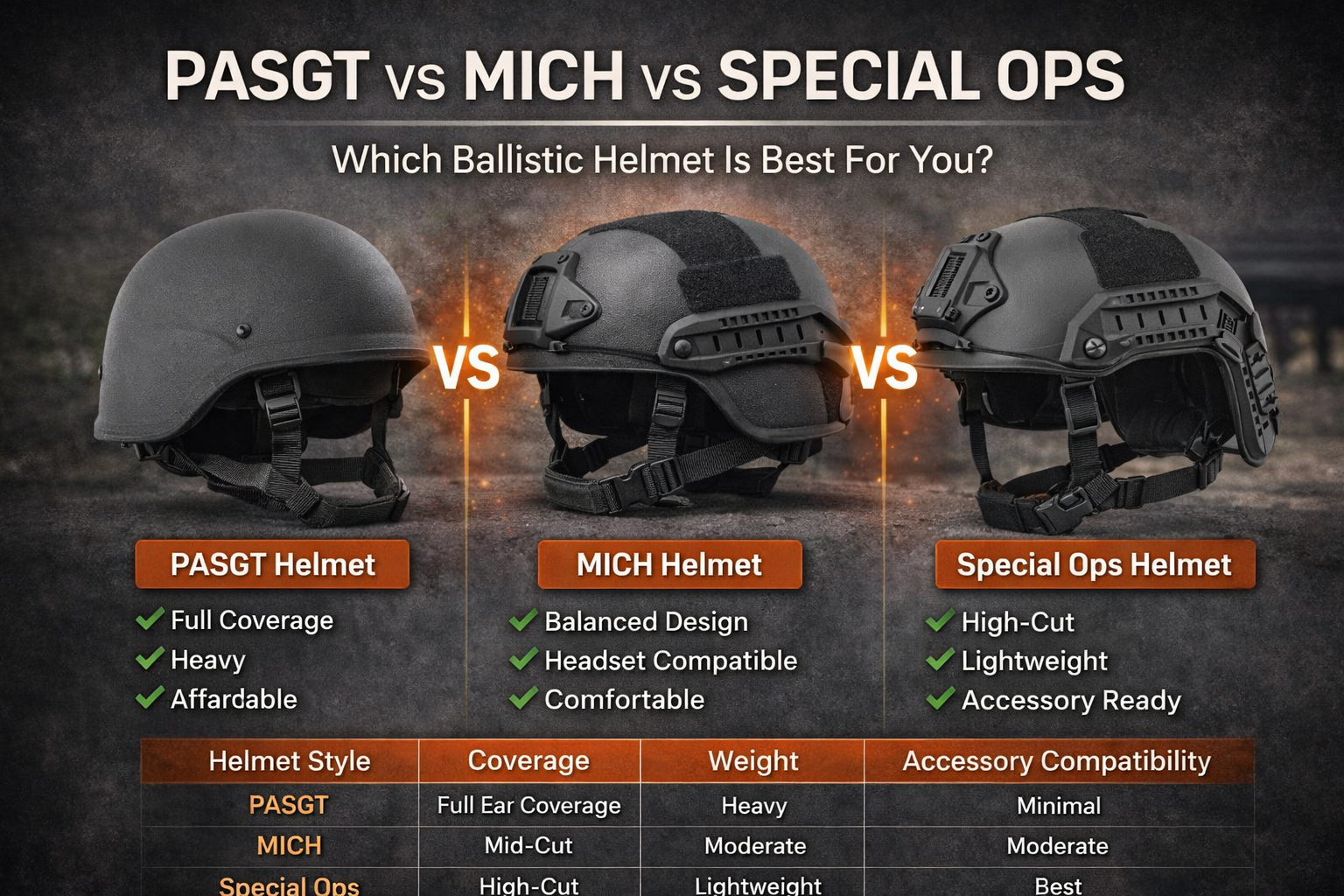
PASGT (Full Cut) Find ours at: PASGT Ballistic Helmet Level IIIA – NIJ Rated Tactical Helmet
-
- Maximum ear coverage
-
- Traditional military design
-
- Slightly heavier
-
- Limited accessory mounting
Best for: Maximum coverage and static security roles.
MICH (Mid-Cut) MICH Ballistic Helmet (Level IIIA) | Legacy Safety and Security Ballistic Helmets
-
- Balanced coverage
-
- Improved headset compatibility
-
- Moderate weight
Best for: Users who want comfort and communication integration.
High-Cut / Special Ops Special Ops Ballistic Helmet Level IIIA: High Performance
-
- Reduced ear coverage
-
- Lightweight
-
- Accessory rails
-
- NVG shroud compatible
Best for: Tactical mobility and modern gear setups.
 Consider Weight and Comfort
Ballistic helmets are worn for extended periods. Key comfort features to look for:
-
- Adjustable suspension system
-
- Internal padding system
-
- Secure chin strap retention
-
- Balanced weight distribution
Heavier helmets provide more surface area coverage but may increase fatigue over time.
 Accessory Compatibility
If you use:
-
- Communication headsets
-
- Night vision devices
-
- Tactical lighting
-
- Rail-mounted accessories
Then a high-cut or modern MICH design is likely the better choice.
 Operational Environment
Ask yourself:
-
- Are you stationary or mobile?
-
- Do you require communications?
-
- Is weight a priority?
-
- Do you need maximum coverage?
Your use case determines the best helmet design.
 Fit and Sizing
Proper fit is critical. A helmet should:
-
- Sit level on the head
-
- Not shift during movement
-
- Maintain secure chin strap contact
-
- Allow clearance for eye protection
Improper fit reduces performance and comfort.
 Budget vs Performance
Entry-level PASGT helmets often cost less due to simpler design.
High-cut helmets typically cost more due to:
-
- Modern shaping
-
- Rail systems
-
- NVG mounting capability
-
- Lighter materials
Choose based on operational need — not just price.
Quick Decision Guide
Choose PASGT if:
-
- You want maximum coverage.
-
- You don’t require headset compatibility.
Choose MICH if:
-
- You want balanced coverage and communication support.
Choose Special Ops / High-Cut if:
-
- You need mobility and accessory integration.
Final Thoughts
The best ballistic helmet is the one that fits your mission.
Protection level matters — but so do comfort, mobility, and compatibility with your gear.
When selecting a helmet, think beyond just protection rating and consider how you’ll actually use it.
Your safety and security is our Legacy.